Bay6 AI — From Generic Vendor to Enterprise Intelligence Platform
Led the end-to-end UX transformation, product naming architecture, and enterprise design system for Bay6 AI (formerly Xemplar AI)—turning fragmented bespoke algorithms into a cohesive product suite that drives 40–60% support deflection and 90%+ predictive accuracy.
The "Generic AI Vendor" Trap
As Xemplar AI evolved into a structured enterprise platform, its market perception lagged behind. Enterprise buyers (CIOs, VP Claims, Chief Risk Officers) were fatigued by vague algorithmic claims and prolonged experimental pilots that failed to reach operational production.

The Name Origin: "Basics" Core philosophy
The name Bay6 originates from the word basics, articulating a foundational design principle: enterprise AI cannot solve high-stakes business problems without mastering core operational requirements—contextual relevance, data privacy, existing system integration, and verifiable ROI.
The rebrand addressed structural architecture rather than superficial aesthetics, transitioning clients from lengthy experimentation to reliable production within 90 days.
- Perceived as custom dev agency
- Isolated scripts and disconnected tools
- Opaque predictive models with drift uncertainty
- Disconnected chatbot handoffs dropping context
- 12–18 month prolonged POC cycles
- Integrated enterprise intelligence platform
- Unified "6-System" architecture (Model6, Agent6)
- Transparent model explainability and drift monitoring
- Context-preserving human-in-the-loop handoff
- Predictable sub-90-day production roadmap
The Think6 Cognitive Framework & Product Naming
To earn trust in highly regulated industries like insurance underwriting and student admissions, we introduced the Think6 Framework. Every platform capability is designed through six cognitive dimensions.
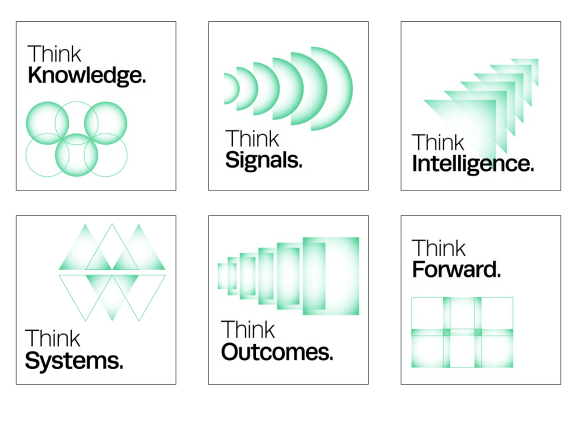
Think Knowledge
Ingests dark enterprise data—unstructured PDFs, policy manuals, and claims logs—making institutional knowledge instantly searchable.
Think Signals
Monitors behavioral and operational patterns to detect customer intent, fraud indicators, and churn risks early.
Think Intelligence
Deploys reasoning agents that adapt dynamically to user nuance rather than failing on rigid scripted decision trees.
Think Systems
Integrates cleanly into existing core platforms (Guidewire, Salesforce, Ellucian) via Model Context Protocol (MCP) and REST APIs.
Think Outcomes
Every interface is engineered toward measurable business goals: inquiry deflection, loss ratio reduction, and improved retention.
Think Forward
Continuous feedback loops where models learn from human operator corrections, steadily compounding in accuracy over time.
The Enterprise Design System
Balancing technological capability with corporate restraint. We formulated a structured design system with clear typography hierarchy and accessible semantic color tokens.

Core Product Interfaces & Schematics
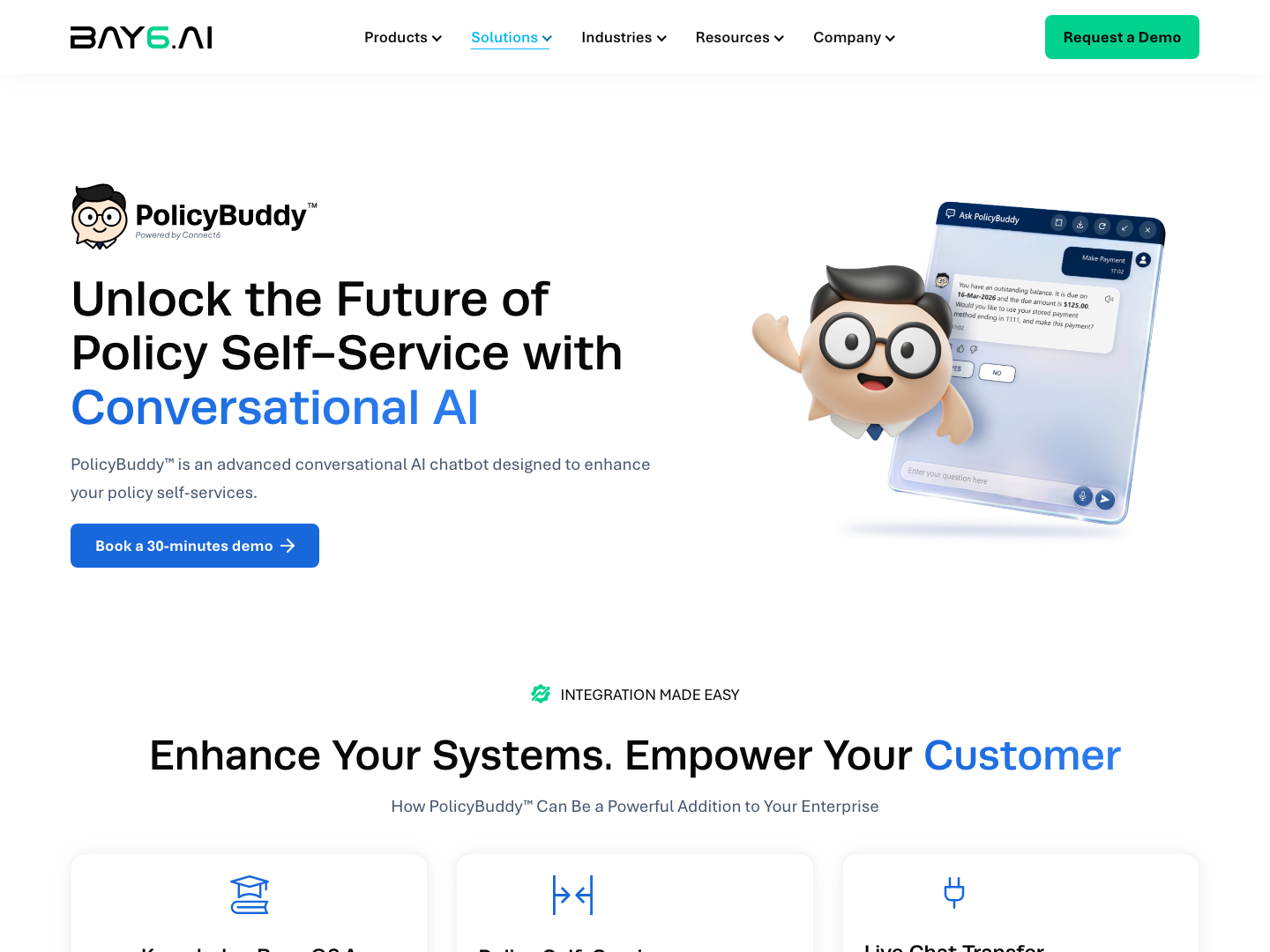
Full-resolution screen captures and architectural schematics designed to simplify high-frequency workflows for enterprise operators and technical managers.
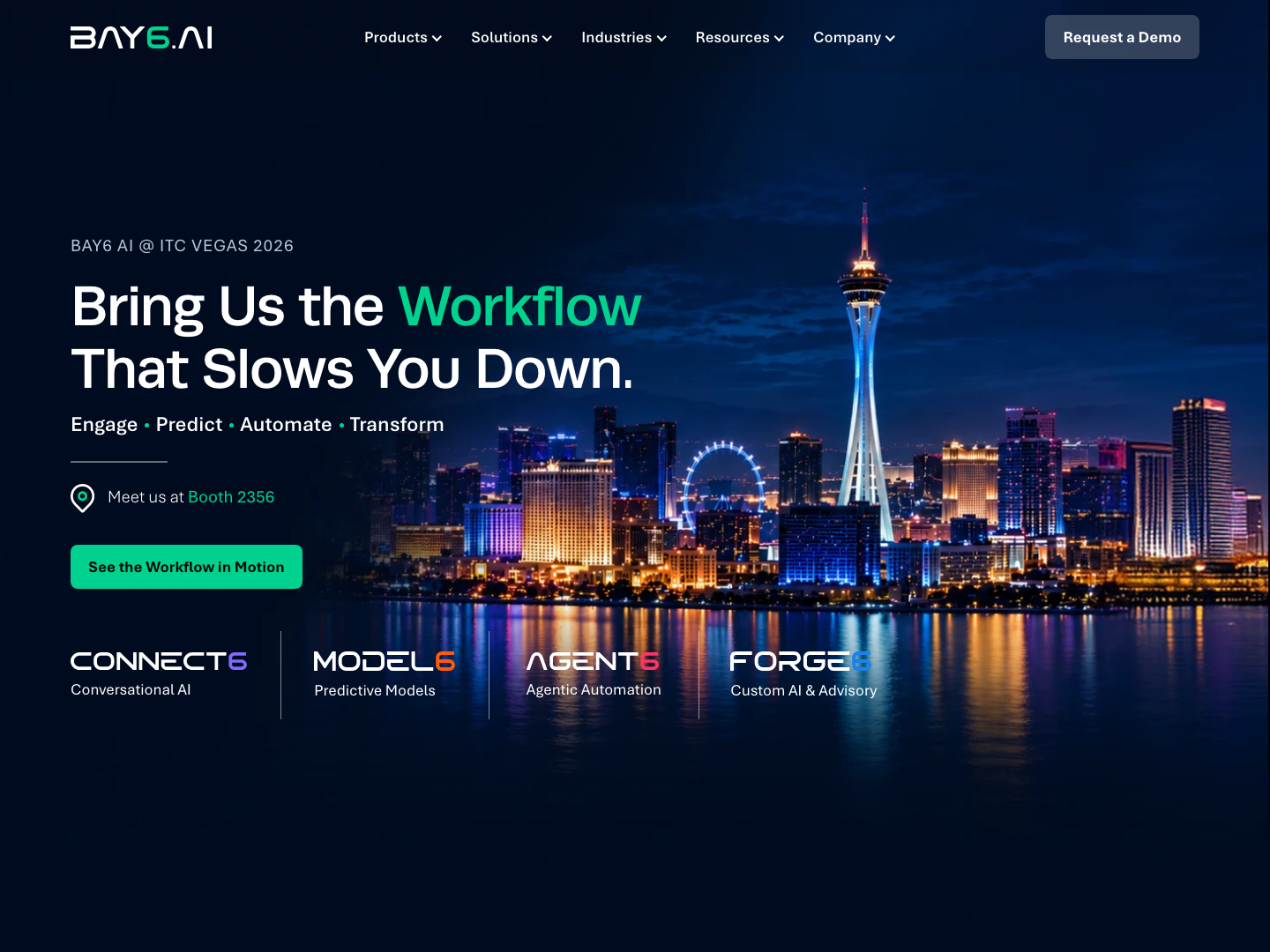
Bring Us the Workflow That Slows You Down
Self-service claims intake with real-time verification and zero-drop CSR escalation.
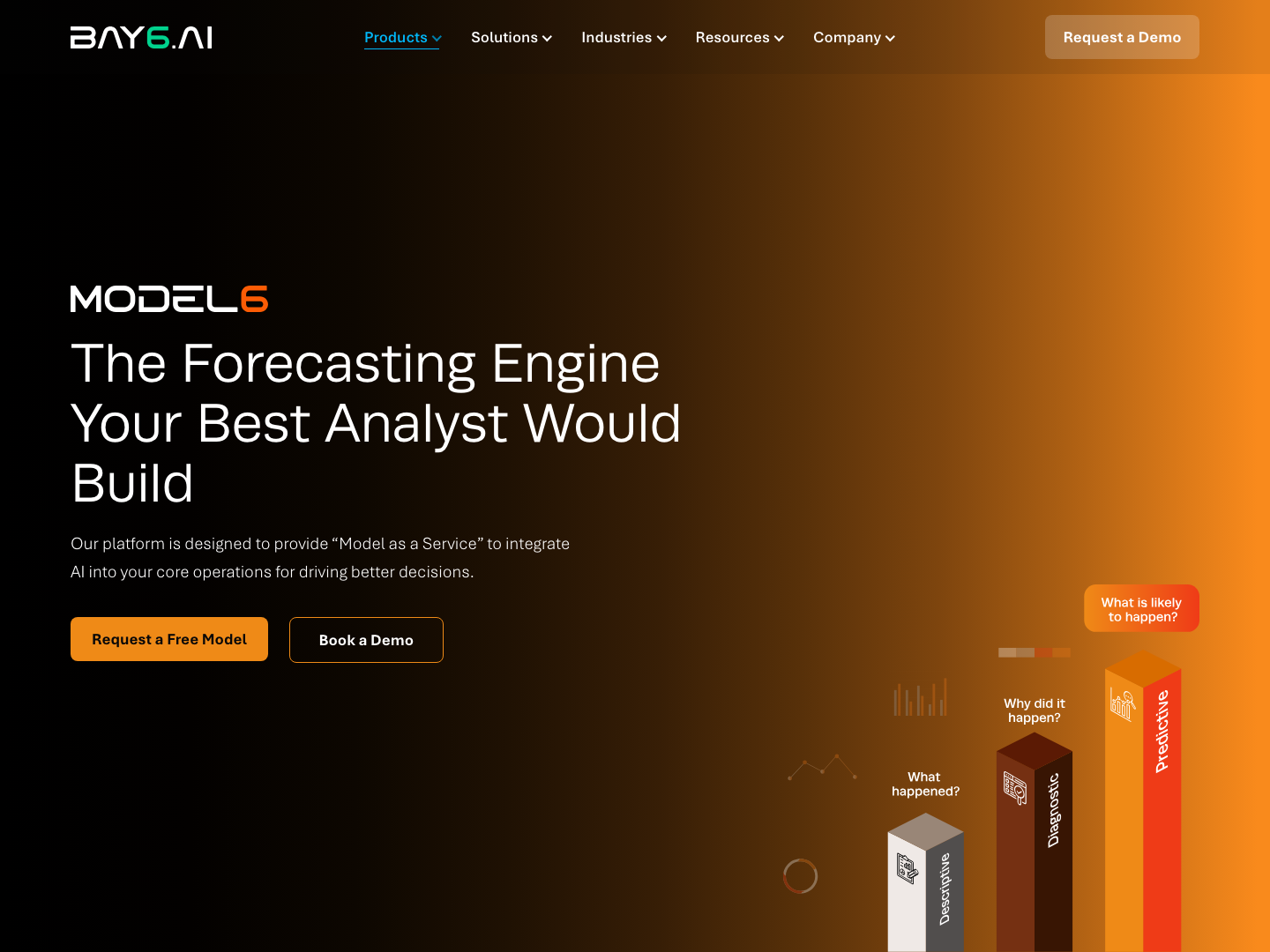
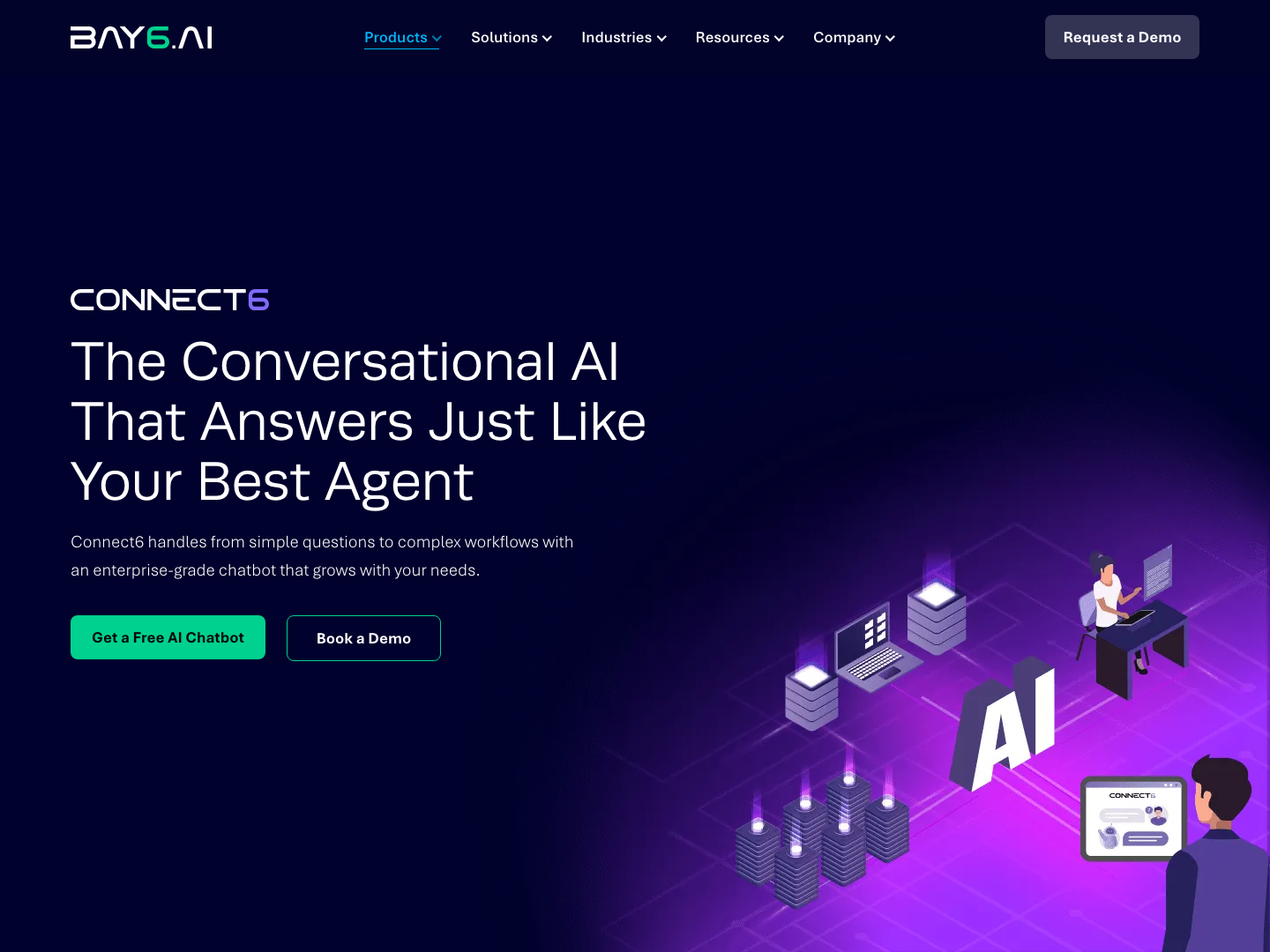
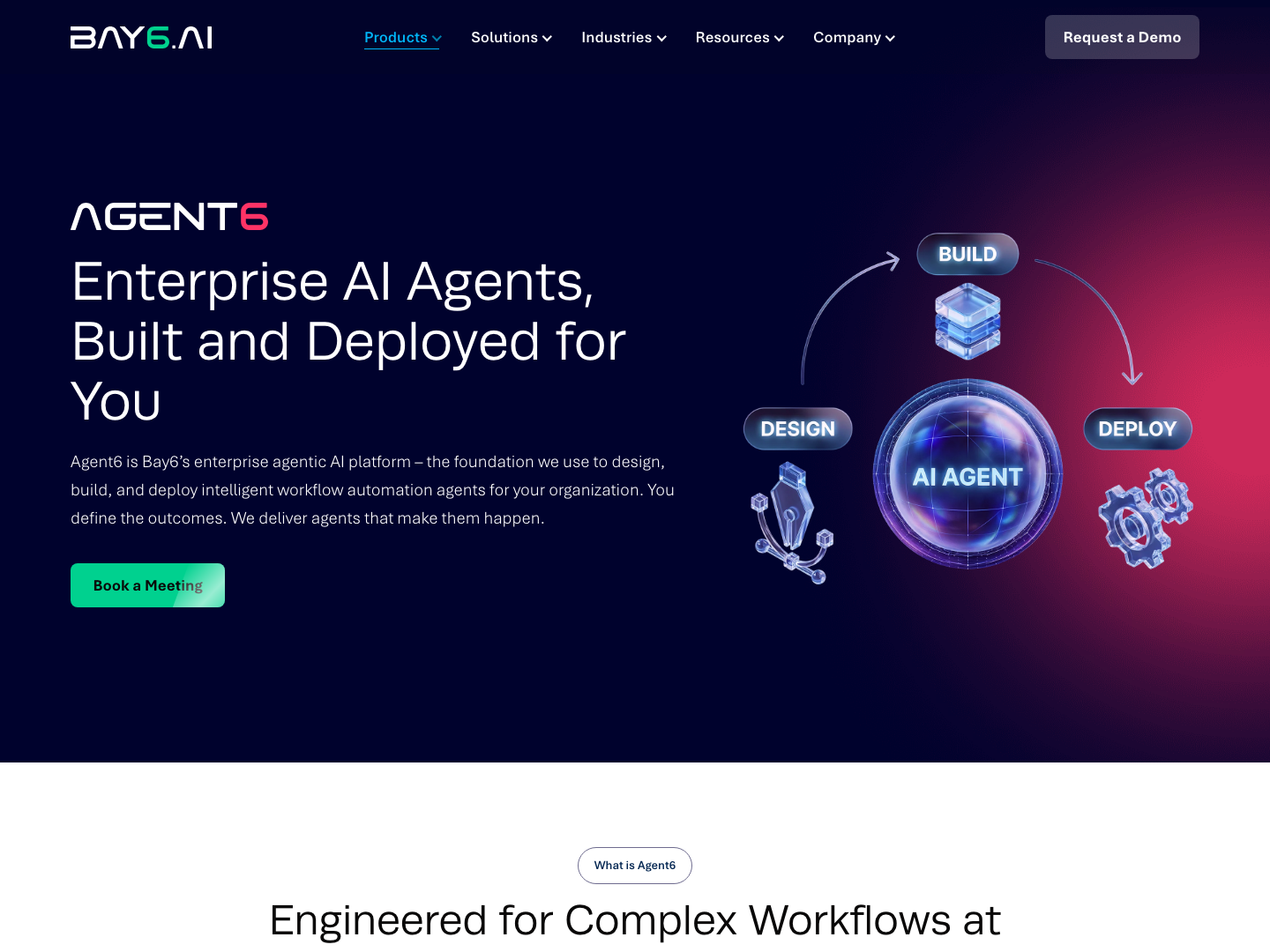
Measurable Business & UX Outcomes
Restructuring the platform architecture, establishing the Think6 Framework, and improving operational visibility delivered verified gains across enterprise benchmarks.
| Performance indicator | Legacy baseline (Xemplar AI) | Bay6 AI platform | Operational impact |
|---|---|---|---|
| Support query deflection | 12% – 18% (scripted FAQ bot) | 40% – 60% | Substantial drop in routine inquiries; eliminates representative burnout during peak seasons. |
| Predictive scoring accuracy | 72% (experimental prototypes) | 90%+ in production | High-confidence loss ratio forecasting and early intervention for policy and student retention. |
| POC-to-production cycle | 12–18 months prolonged pilots | < 90 Days | Standardized Model6 Lite onboarding and pre-trained domain templates reduced deployment friction by 75%. |
| Website bounce rate | 74% (generic vendor positioning) | 26% (-65% drop) | Interactive workflow diagrams immediately clarified operational value to enterprise buyers. |
| Enterprise demo inquiries | ~8–10 per quarter | +300% Inbound surge | Clear product naming architecture enabled technology leaders to present adoption proposals internally. |
| Support representative satisfaction | 2.9 / 5.0 (fragmented context) | 4.8 / 5.0 Rating | Single-pane AI Context Card eliminated repetitive user questions during live escalations. |
Design Decisions & Usability Iterations
Key adjustments derived from 24 usability review sessions with enterprise system architects, claims adjusters, and customer service teams.
Replacing decorative visuals with workflows
Initial explorations included abstract 3D elements. Enterprise evaluators found them detached from daily operations.
Preventing notification fatigue
Frequent pop-up banners during shift peaks caused representatives to dismiss critical customer alerts.
Clarifying model performance telemetry
Complex statistical error charts made it difficult for operational managers to know when models required review.